
Texas Traffic Ticket Records
Texas traffic ticket records are public documents held by Justice of the Peace courts, municipal courts, and the Texas Department of Public Safety. Whether your citation came from a DPS trooper on the highway, a county constable on a rural road, or a city officer in town, this guide covers how to find your case, understand your options, and take action. Texas has 254 counties and hundreds of cities, each with its own court system, so knowing where to look is the first step.
Texas Traffic Ticket Records Overview
How the Texas Traffic Court System Works
Texas traffic tickets are Class C misdemeanors. Two types of courts handle them: Justice of the Peace courts and municipal courts. Knowing which type applies to your ticket tells you exactly where to go.
Justice of the Peace courts, or JP courts, handle citations issued by DPS state troopers, county constables, and sheriff's deputies. These are often tickets you get on state highways, county roads, and in unincorporated areas outside city limits. Every Texas county has at least one JP precinct. Some larger counties like Harris have 16 JP courts split across eight precincts. The JP court for your ticket depends on where the violation happened.
Municipal courts handle citations issued by city police officers within city limits. Each city with its own police department runs its own municipal court. Houston, San Antonio, Dallas, Fort Worth, Austin, and El Paso all have multiple municipal court locations to serve their large populations. If your ticket was written by a city cop, your case is in municipal court, not JP court. The two systems are separate. Records from one are not in the other.
Note: The officer's agency tells you which court has your case. DPS, constable, or sheriff tickets go to JP court. City police tickets go to municipal court.
How to Search Texas Traffic Ticket Records
The fastest way to search Texas traffic ticket records statewide is the TOPICs portal. Texas Online Public Information and Court Services lets you search citations by number, name, or driver's license. It pulls data from JP courts across many Texas counties.
The TOPICs citation search at topics.txcourts.gov/CitationsPublic is the main statewide tool. Enter your citation number or name to find your case. The system shows court location, case status, and upcoming dates. Not every county uses it, but it covers a large portion of the state. If your county is not in TOPICs, go directly to the county's JP court portal or call the court using the contact information on your ticket.
The screenshot below shows the TOPICs statewide citation search portal, which is the primary online tool for finding JP court traffic records across Texas.
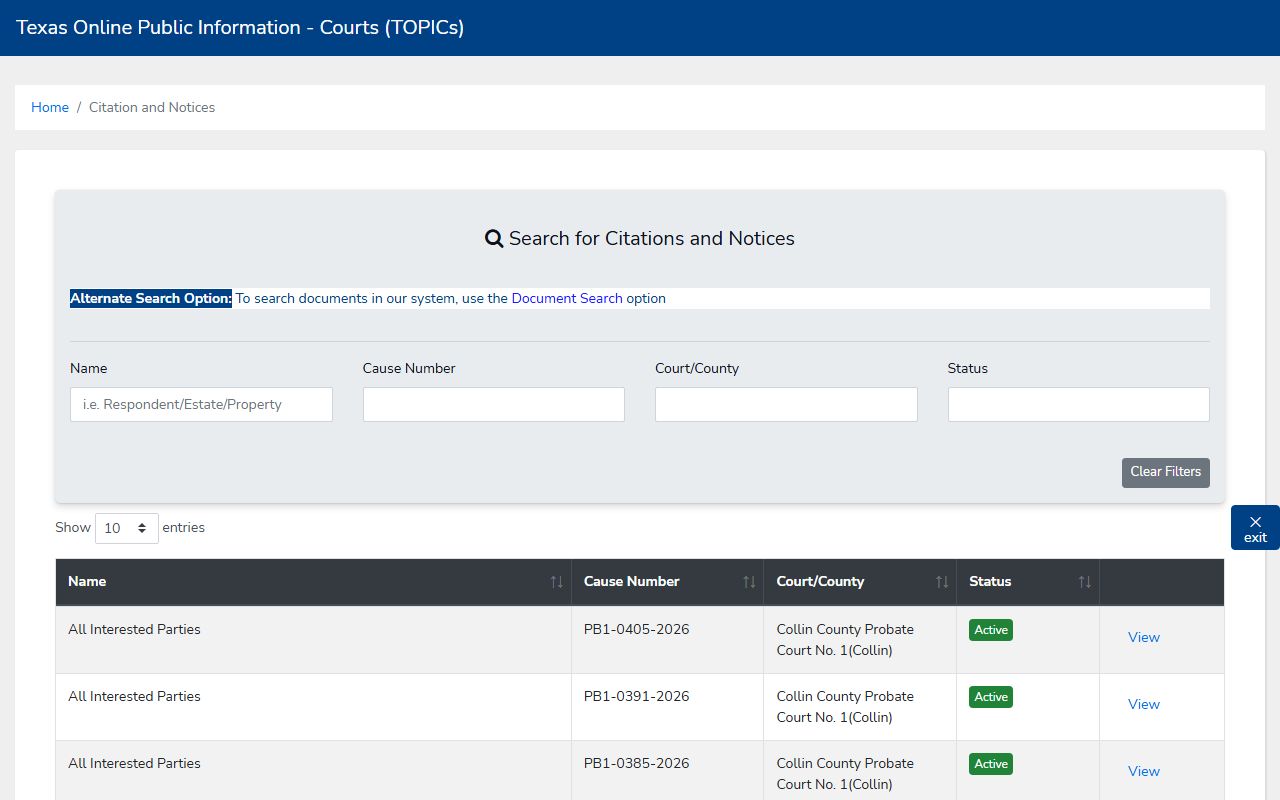
The TOPICs system at topics.txcourts.gov/CitationsPublic allows anyone to search Texas JP court traffic citations by name, citation number, or driver's license number without creating an account.
For municipal court tickets, you need to search the specific city's online portal. Most large Texas cities have their own case search tools. Dallas uses municipalonlinepayments.com. Houston uses municipalonlinepayments.com/houstontx. San Antonio uses municipalonlinepayments.com/sanantoniotx. El Paso has a public access portal at elpasotexas.gov. Austin's portal is at austintexas.gov.
For your Texas driving record and to see how a ticket affected your DPS record, visit dps.texas.gov. Type 3A certified records are often needed for court purposes and insurance reviews. Basic records start at $4.50 online. You can also order by mail using Form DR-1 to Texas DPS, P.O. Box 149008, Austin, TX 78714-9008.
The screenshot below shows the Texas DPS driver license portal where you can order official driving records.
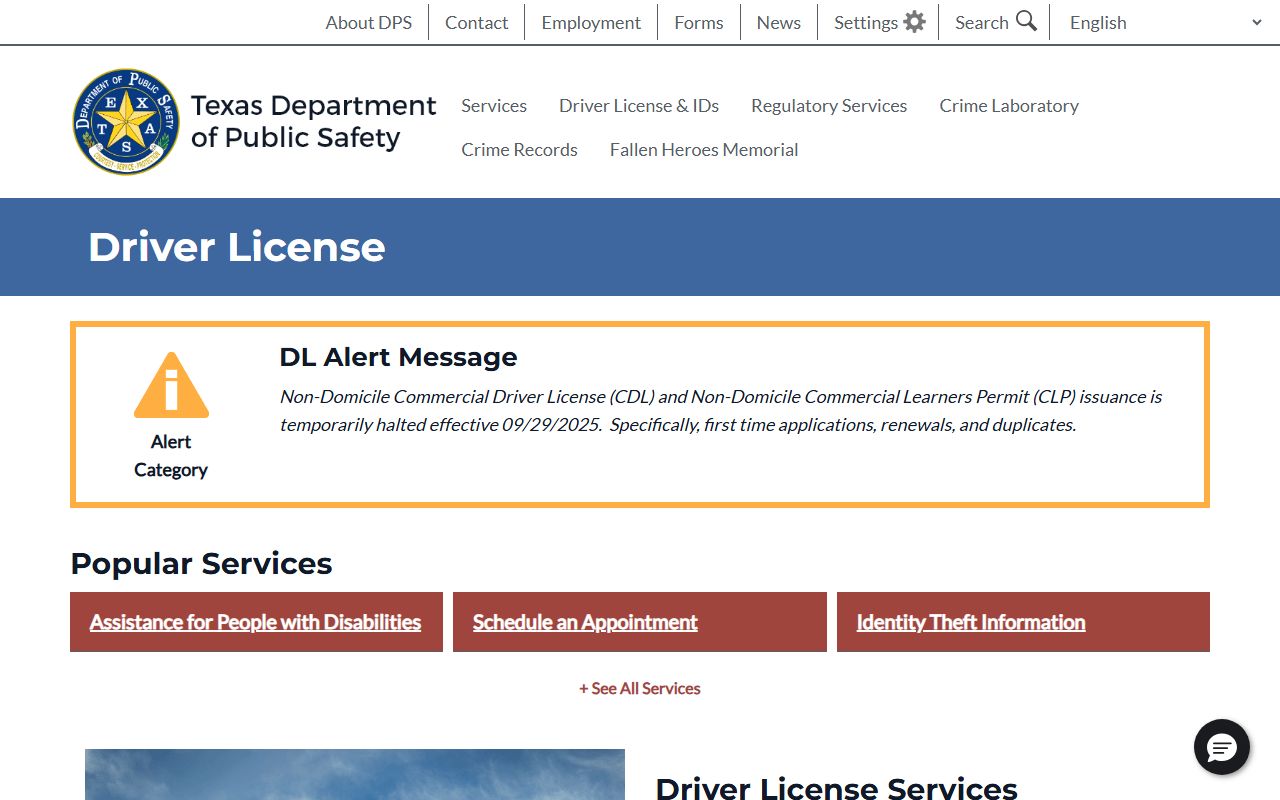
The Texas DPS driver license portal provides access to your official driving record, which shows citations, convictions, and any license actions that resulted from traffic ticket cases.
Paying a Texas Traffic Ticket
Paying a traffic ticket in Texas is a guilty plea. Under Art. 27.14(c) of the Texas Code of Criminal Procedure, paying your fine is treated as a waiver of your right to trial and a finding of guilt. The conviction gets reported to Texas DPS. For moving violations, this can affect your insurance rates. Think before you pay, especially for speeding tickets.
Payment methods depend on the court. Most JP courts accept online payments through the county portal or a third-party system. Many accept phone payments and in-person cash or card. Municipal courts in large cities offer online payment portals, phone lines, and walk-in service. Fort Worth accepts payment through ncourt.com. Houston accepts payment at municipalonlinepayments.com. Check the specific court's website or your citation for payment details and the exact fine amount.
If you miss your court date, you may face a warrant and an OMNI hold on your driver's license. The OMNI program blocks your license renewal until you pay the original fine plus a $10 OMNI fee. Resolve OMNI holds at texasfailuretoappear.com. This program is authorized under Transportation Code Chapter 706.
The screenshot below shows the Texas failure to appear OMNI program portal used to resolve license holds caused by unpaid traffic citations.
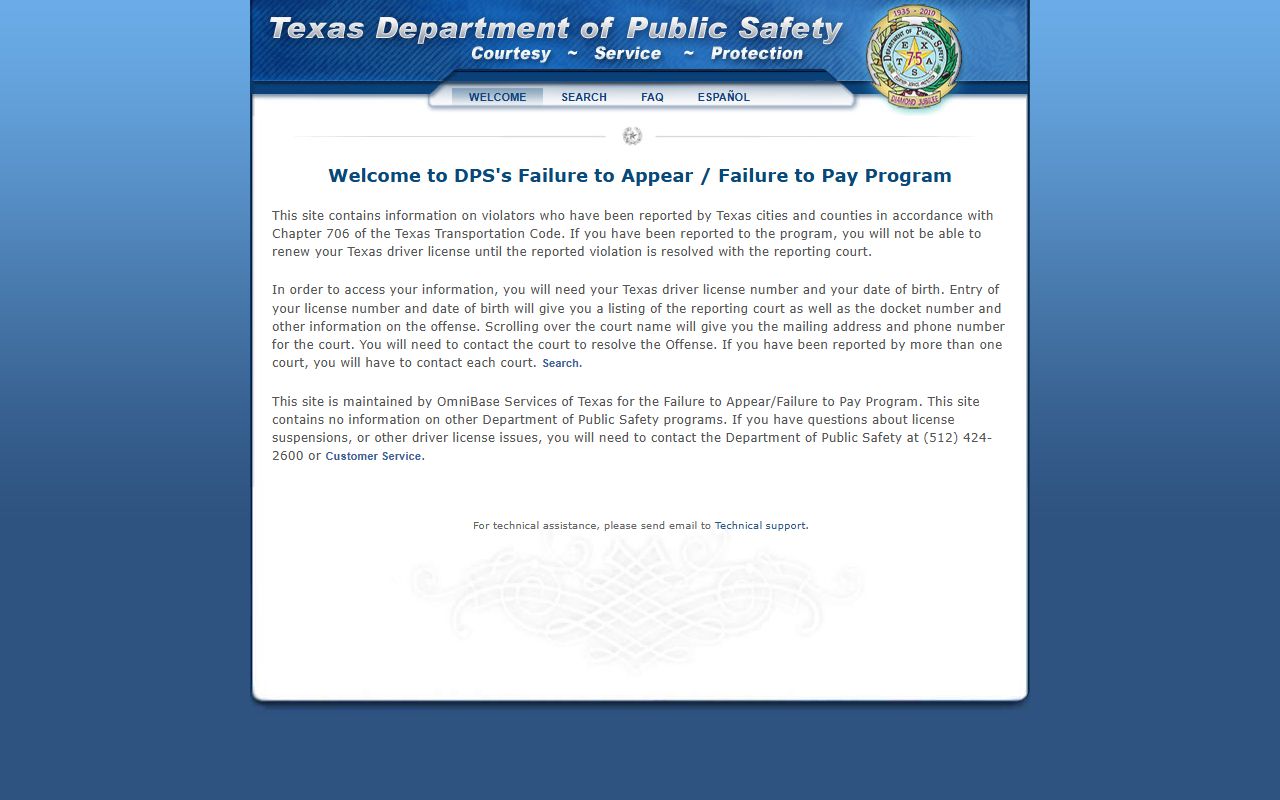
The OMNI portal at texasfailuretoappear.com is where Texas drivers can pay the OMNI fee and resolve license renewal blocks tied to unpaid traffic citations in JP courts statewide.
Defensive Driving and Dismissal Options
Texas gives eligible drivers two main ways to keep a traffic ticket off their record: defensive driving course dismissal and deferred disposition. Both options can prevent a conviction from appearing on your DPS driving record, which matters for insurance rates and your license status.
Defensive driving dismissal, also called driving safety course or DSC dismissal, is governed by Art. 45.0511 of the Texas Code of Criminal Procedure. To qualify, you must request DSC before your court date. You cannot have taken a DSC course for a citation in the past 12 months. CDL holders driving a commercial vehicle at the time of the citation are not eligible. You also cannot be going 25 mph or more over the speed limit. If approved, you have 90 days to complete a TDLR-approved course and submit your certificate to the court.
TDLR approves all defensive driving providers in Texas. The full list of approved courses is at tdlr.texas.gov. Online courses are widely available and accepted in most courts. Keep a copy of your certificate until the dismissal shows on your DPS record as a Type 3A.
Deferred disposition is the other option. Under Art. 45.051 of the Code of Criminal Procedure, the judge can place your case on hold for a probation period, typically 90 to 180 days. If you comply with the conditions and avoid new violations, the case is dismissed at the end of the period. Deferred disposition is available even when DSC is not, such as when you have already used DSC within the past 12 months. Ask the court about deferred when you appear or call ahead of your court date.
The screenshot below shows the TDLR defensive driving page where Texas drivers can find approved course providers for citation dismissals.

The TDLR portal at tdlr.texas.gov lists all approved defensive driving course providers in Texas. Completing one of these courses and filing the certificate with your court results in a Type 3A dismissal on your DPS record.
Texas Traffic Laws and Statutes
Texas traffic law comes from several sources. The Texas Transportation Code covers moving violations, speed limits, equipment rules, and license requirements. The Code of Criminal Procedure sets the rules for how courts handle Class C misdemeanor cases, including your rights, dismissal procedures, and deferred disposition. The Penal Code defines certain offenses that start as traffic stops but become criminal charges.
Key statutes for traffic tickets in Texas include Art. 27.14(c) CCP (payment as guilty plea), Art. 45.051 CCP (deferred disposition), Art. 45.0511 CCP (defensive driving dismissal), and Transportation Code Chapter 706 (OMNI failure to appear program). You can read all of these at statutes.capitol.texas.gov.
Texas abolished its traffic violation point system in 2019. Before that, DPS tracked points and could suspend licenses after accumulating enough. Today, DPS can still suspend your license for too many convictions in a short period: four or more convictions in 12 months or seven or more in 24 months can trigger a suspension review. Each conviction stays on your DPS record and can be seen by insurers who order a Type 2A or 3A record.
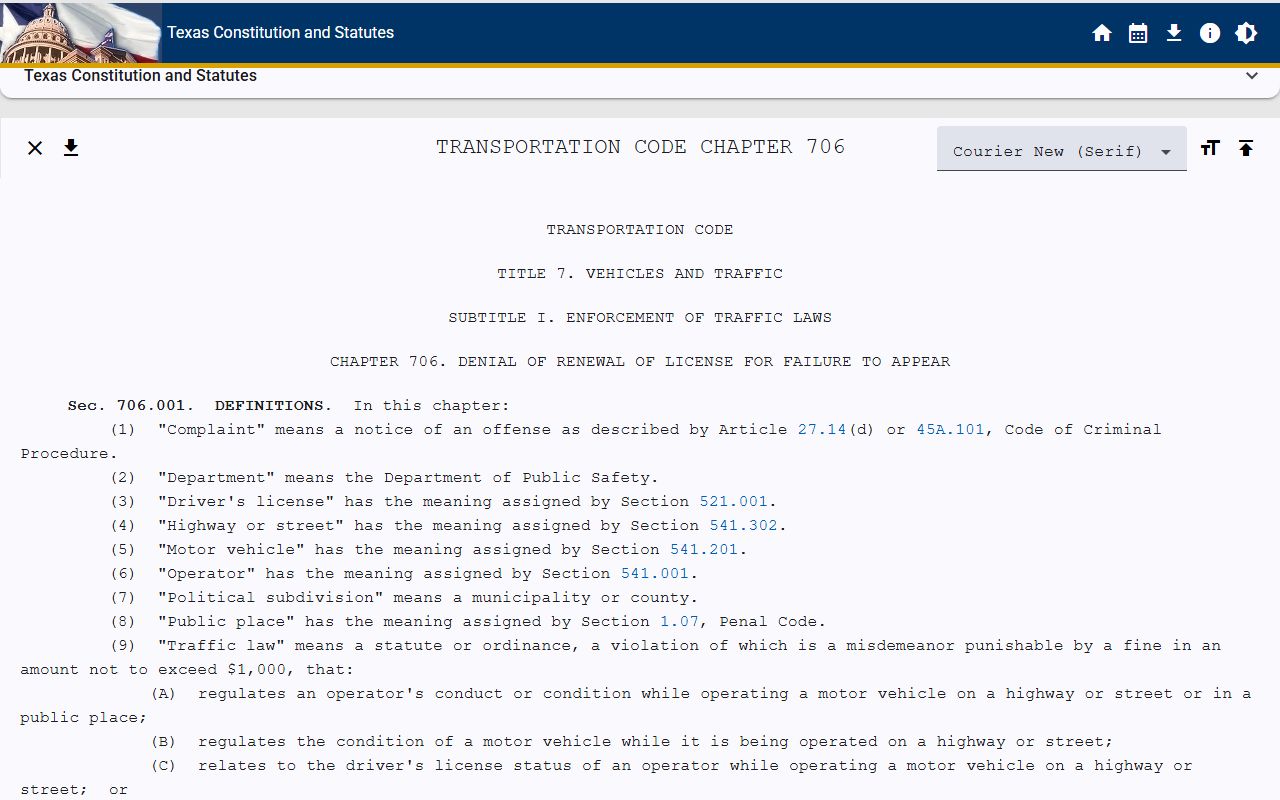
The Texas Transportation Code at statutes.capitol.texas.gov covers the OMNI failure to appear program under Chapter 706 and other laws governing traffic citations, license holds, and driver record reporting across the state.
Texas DPS and Driving Records
The Texas Department of Public Safety maintains your driving record. After a traffic court case closes, the conviction or dismissal gets reported to DPS and appears on your record. DPS offers several record types for different purposes. A Type 3A certified complete history is what courts and insurers often request. Basic records start at $4.50 for an online order. Certified records cost $12 online or $10 by mail.
You can order your record at dps.texas.gov or by mailing Form DR-1 to Texas DPS, Driver Records, P.O. Box 149008, Austin, TX 78714-9008. Insurers and employers use these records to check your history. Check your record after a case closes to confirm the outcome was entered correctly. If a conviction shows that should have been dismissed, contact the court to have them send a corrected report to DPS.

The Texas driver services portal provides access to driving record ordering, license status checks, and other DPS services that connect to your traffic ticket history and court outcomes.
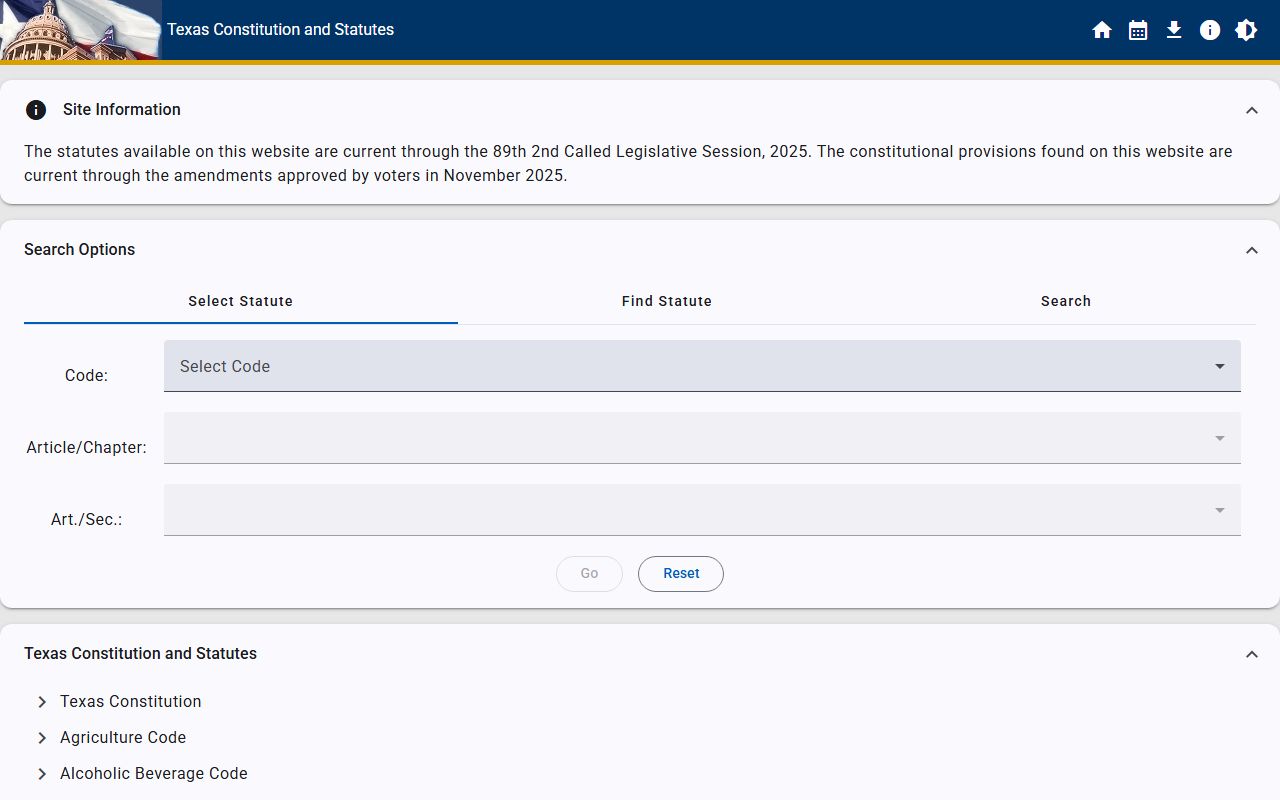
The Texas statutes portal at statutes.capitol.texas.gov is the official source for all Texas laws governing traffic citations, court procedures, dismissal options, and driving record requirements.
Browse Texas Traffic Ticket Records by County
Each of Texas's 254 counties has its own JP court system for traffic citations. Select a county below to find court contacts, search tools, and local resources.
Major Texas Cities
Texas cities with their own police departments operate municipal courts for traffic citations. Select a city to find the municipal court and online payment options.