
Find Traffic Records in Colorado County
Colorado County traffic ticket records cover citations issued on county roads and state highways between Columbus and the surrounding rural areas south of I-10. The county's four Justice of the Peace precincts handle Class C misdemeanor violations written by county deputies and state troopers. If a Columbus city officer wrote your ticket, that case goes to Columbus Municipal Court. This guide explains how to find your citation, what your options are, and how to avoid a license hold.
Colorado County Overview
Which Court Has Your Case
Colorado County has four Justice of the Peace precincts. The precinct that handles your ticket depends on where the officer stopped you. Your citation should list the court name and contact information. If it doesn't, or if you've misplaced the ticket, call the County Clerk at (979) 732-8385.
JP courts cover moving violations on county and state roads. That includes speeding on Highway 90 or I-10, running stop signs on farm-to-market roads, and other Class C traffic offenses. The court precinct number on your ticket tells you which JP judge has jurisdiction.
Columbus Municipal Court handles tickets written by the Columbus Police Department inside city limits. Those are different cases from the JP court. If you're not sure which court to contact, call the County Clerk first, and they'll point you in the right direction.
Citation Lookup
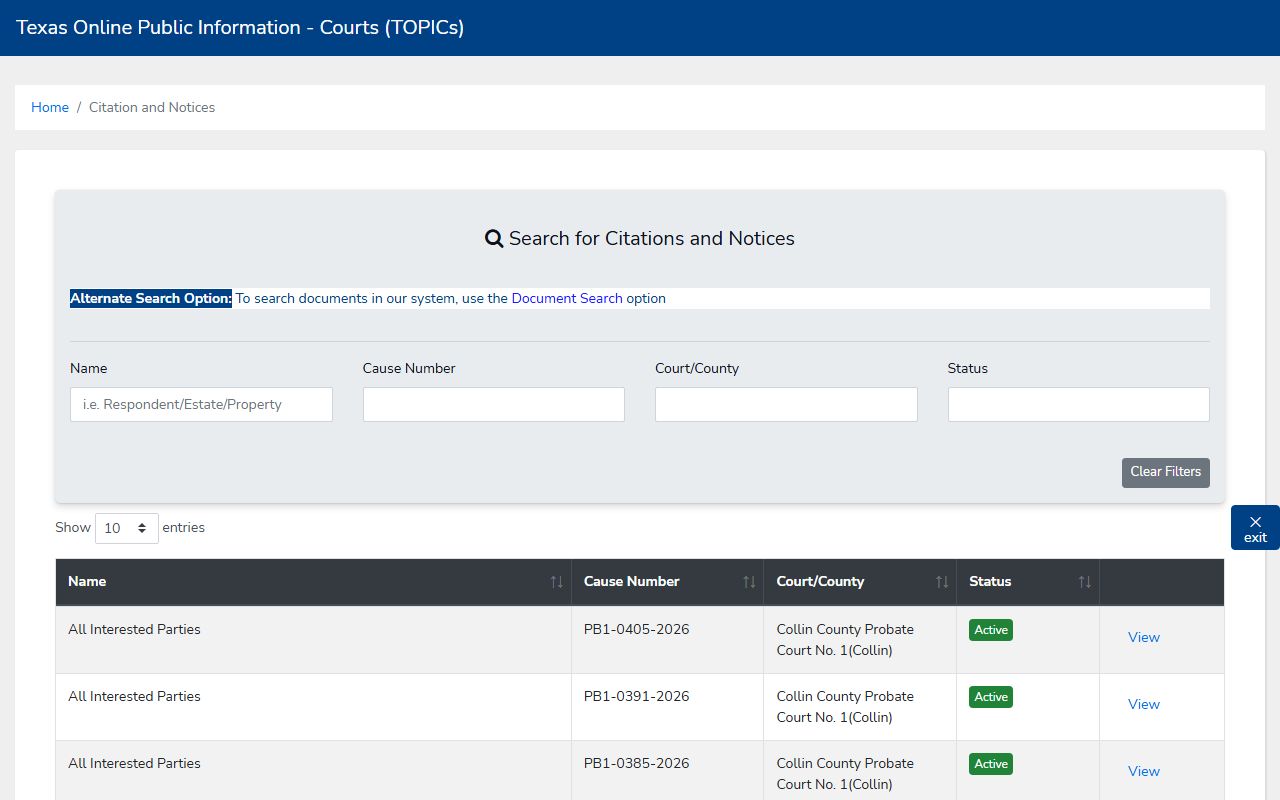
The fastest way to find your case online is through the Texas TOPICs citation search at topics.txcourts.gov/CitationsPublic. You can search by your name or citation number. The tool works for JP courts and municipal courts across Texas, including Colorado County.
TOPICs shows case status, the filing court, and any scheduled court dates for Texas traffic citations.
If your ticket was just written, give it a few days before searching. Courts typically enter new citations within 10 days. If the ticket still doesn't show up after two weeks, call the court directly.
Write down everything you find in the search: the citation number, court name, and any listed court date. You'll need those details when you contact the court or show up to pay or contest.
Paying Your Fine
Colorado County JP courts handle payments in person at the courthouse in Columbus. Some precincts may accept payments by phone or mail. Call the specific precinct to ask what methods they accept and what the total amount due is, including court costs.
Paying a ticket in Texas is treated as a guilty plea under Article 27.14(c) of the Code of Criminal Procedure. The conviction gets reported to DPS and goes on your state driving record. It can affect your insurance rates. If you'd rather avoid the conviction, ask the court about deferred disposition before you pay.
Tip: Get a receipt any time you pay a fine in person or by mail. Rural courts don't always have robust digital record systems. A paper receipt is your protection if a dispute arises later.
Dismissal Options in Texas
Texas gives drivers two legal paths to dismiss a ticket without a conviction. Deferred disposition under Article 45.051 lets the judge place you on probation for up to 180 days. Complete the probation period without a new violation or other violations of the court's conditions, and the ticket gets dismissed. You still pay court costs and a deferred fee, but the charge doesn't hit your record.
The other path is defensive driving dismissal under Article 45.0511. You request it from the court before or on your court date. If approved, you complete a state-approved course through a TDLR-licensed provider and submit a completion certificate to the court. The case is then dismissed. See approved providers at tdlr.texas.gov. Many courses are now available online, which makes this easier to do from a rural area.
Both options require court approval. Ask which one fits your situation. If you're a commercial driver or if the violation happened in a school zone, your options may be limited.
License Holds and Warrants
Failing to appear or ignoring a fine deadline in Colorado County can lead to an OMNI hold on your Texas driver's license. Once a hold is in place, you can't renew your license until you clear it. Check for holds at texasfailuretoappear.com. The reinstatement fee is $10 for cases filed in 2020 or later, and $30 for older cases.
The hold doesn't disappear on its own. You have to resolve the underlying ticket with the court first, then pay the OMNI fee. Some people pay OMNI and think the ticket is settled. It isn't. Both steps must be done.
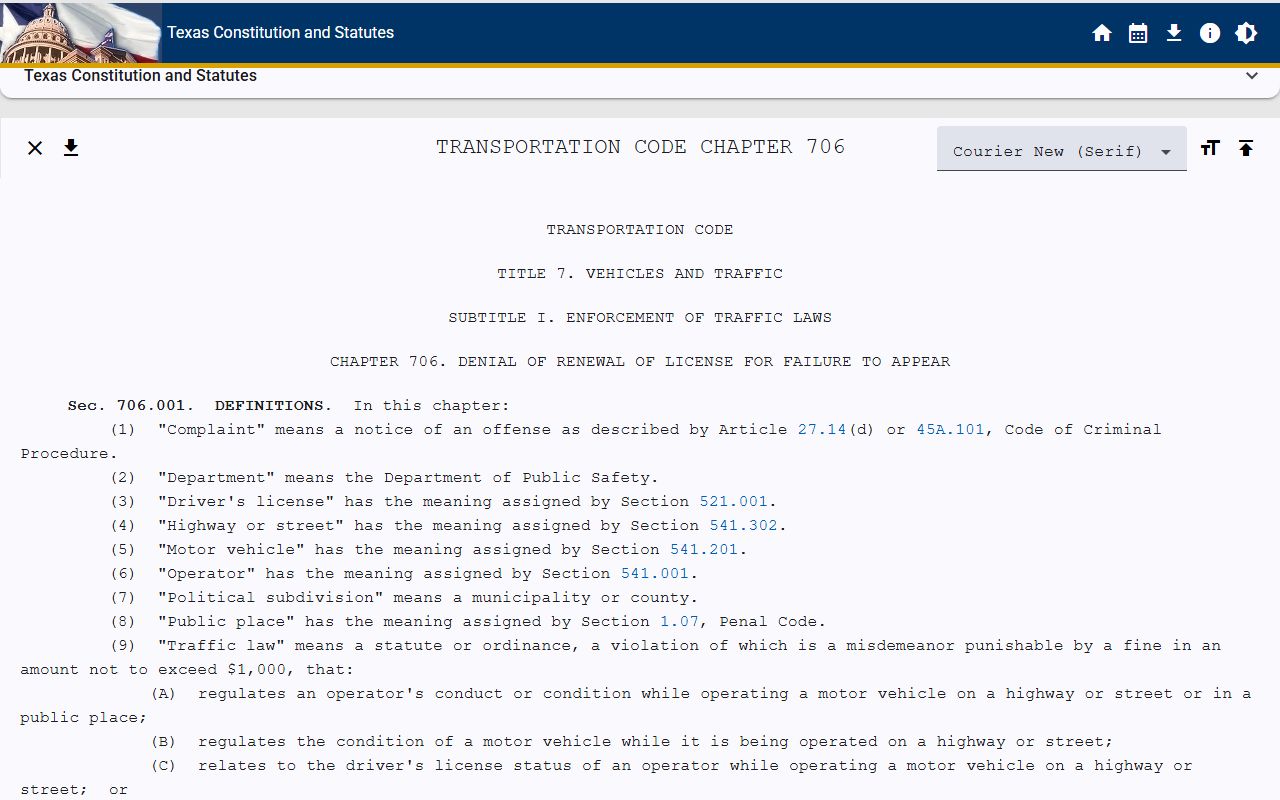
Texas Transportation Code Chapter 706 governs license renewal denial for unpaid citations and failure to appear.
Once you settle the case and pay OMNI, DPS should clear the renewal block within a few business days.
Driving Record Access
You can get your Texas driving record from DPS. A Type 3A record costs $12 online or $10 by mail. Visit dps.texas.gov/section/driver-license to order. The record shows all traffic convictions, any license suspensions, and prior OMNI holds. Most insurance companies use this record when setting your rates.
Texas ended its point surcharge system in 2019, so you no longer get billed annually for driving points. But convictions still count toward suspension thresholds. Four violations in a 12-month window or seven in 24 months can result in a suspension. Dismissals through deferred or defensive driving don't count toward those totals.
Nearby Counties
Colorado County sits in the coastal plains region and borders several Gulf Coast and inland counties.